 LOGIC DREAMING
DREAMS ARE PRECISE MESSAGES
Decode the message. Act on it.
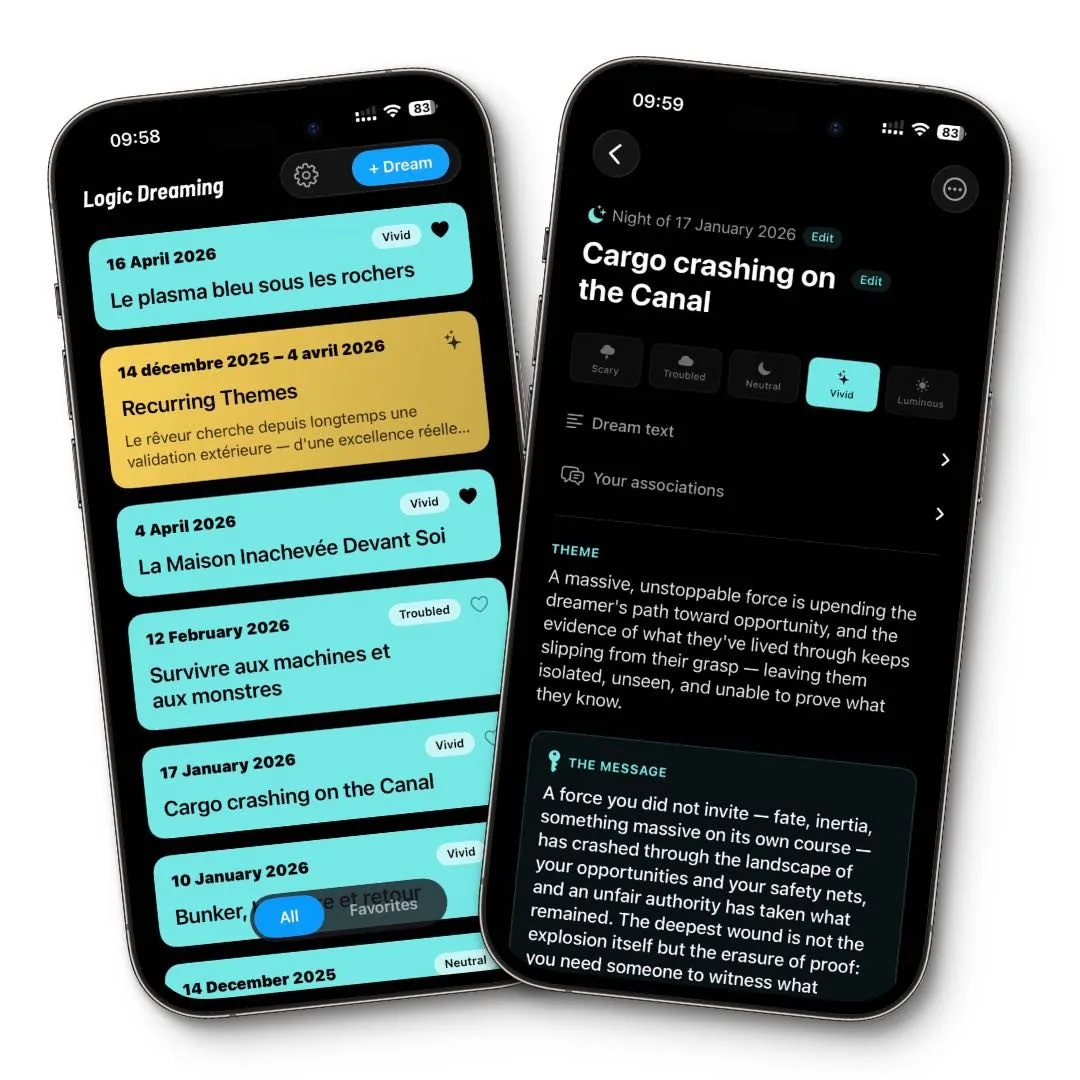
One dream is enough. Dictate it when you wake; the Detective asks what its images mean to you — not to a dictionary — and the Interpreter turns your answers into a precise reading, with an exercise to act on it that night.
THE METHOD
An investigation, not a horoscope.
-
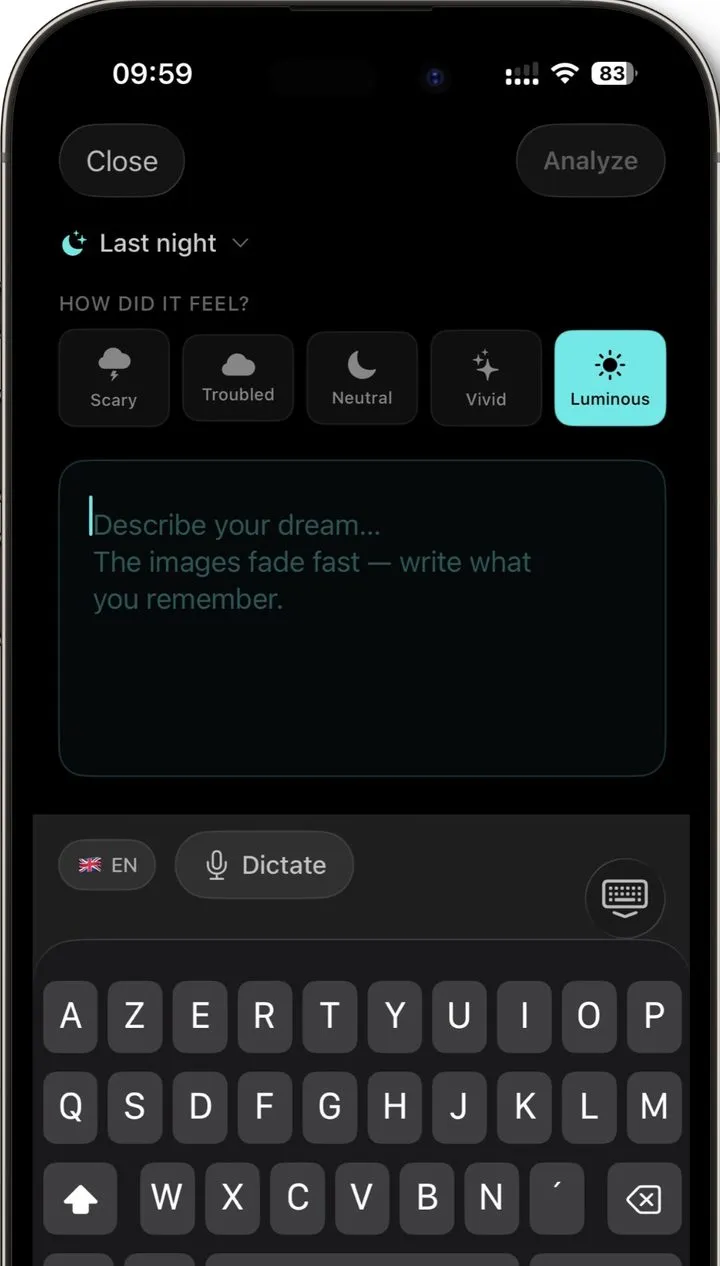
Record
Dictate or type the dream while it is still fresh, and tag how it felt — scary, troubled, neutral, vivid, luminous.
-
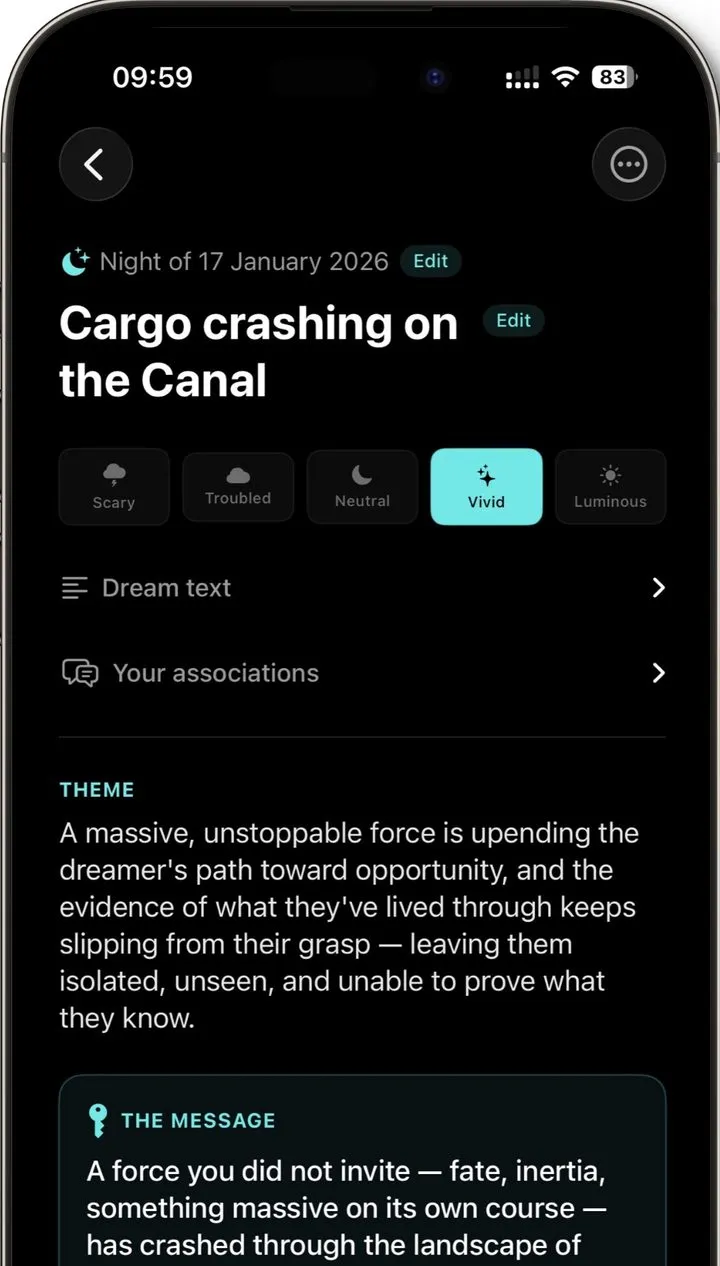
Decode
The Detective names the dream's acts and theme, then asks a few fast questions about your images. The Interpreter weaves your answers into the analysis — and condenses it into the Message.
-
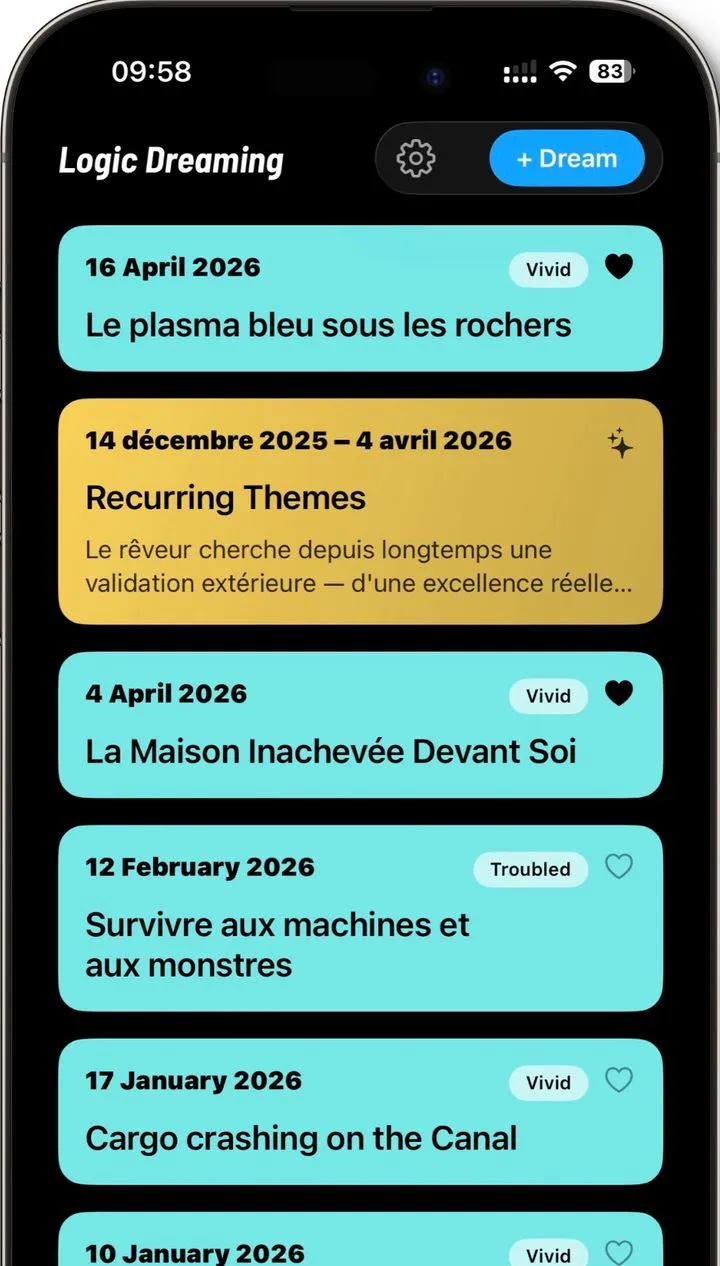
See the pattern
Every five dreams — whether they take a week or a season — a cross-dream analysis names the themes that keep returning and tracks how they evolve.
WHAT DREAMERS SAY
“It was so personal it made me cry.”
- ON THE ANALYSIS
“It named exactly where I am in my life right now. I read it and cried.”
- ON THE METHOD
“More powerful than my sessions with my psychologist ever were — I've stopped going.”
- ON DECISIONS
“The decoding alone answered the questions I'd been carrying about my relationship and my work.”
The analysis is built from your associations — your images, your answers — which is why it lands this personally.
REPROGRAM
Answer the dream in its own language.
The unconscious speaks in images, not words. So the method does not stop at insight: every analysis ends in a reprogramming exercise — a targeted visualization you practise before sleep.
- 1Keep the dream's setting exactly as it was.
- 2Find the problematic element — the threat, the block, the dead end.
- 3Replace it with its opposite.
- 4Visualize the revised scene, deeply relaxed, before falling asleep.
- 5Anchor it with a single phrase.
THE LONG ARC
Five dreams. One pattern.
The message repeats until it is heard. Every five entries — however long they take you — Logic Dreaming reads them as one record and names what keeps returning.
FOUNDATIONS
The method synthesizes a century of depth psychology — Jung, Gurdjieff, Krishnamurti — with the contemplative traditions that have mapped consciousness for millennia: the Sufis, Vedanta, Zen, the Upanishads. A practice of seeing, not a horoscope — and not a medical or diagnostic tool.